25 billion RWA track erupts: Traditional finance fully enters the market, Robeco Labs reshapes asset digitization landscape
In March 2026, a set of data sent ripples across the digital asset industry. According to RWA.xyz, as of March 8, the total on-chain value of tokenized Real World Assets (RWA), excluding stablecoins, has surpassed $250 billion. This figure marks a nearly fourfold increase from approximately $6.4 billion one year prior, representing a year-on-year surge of 289%.
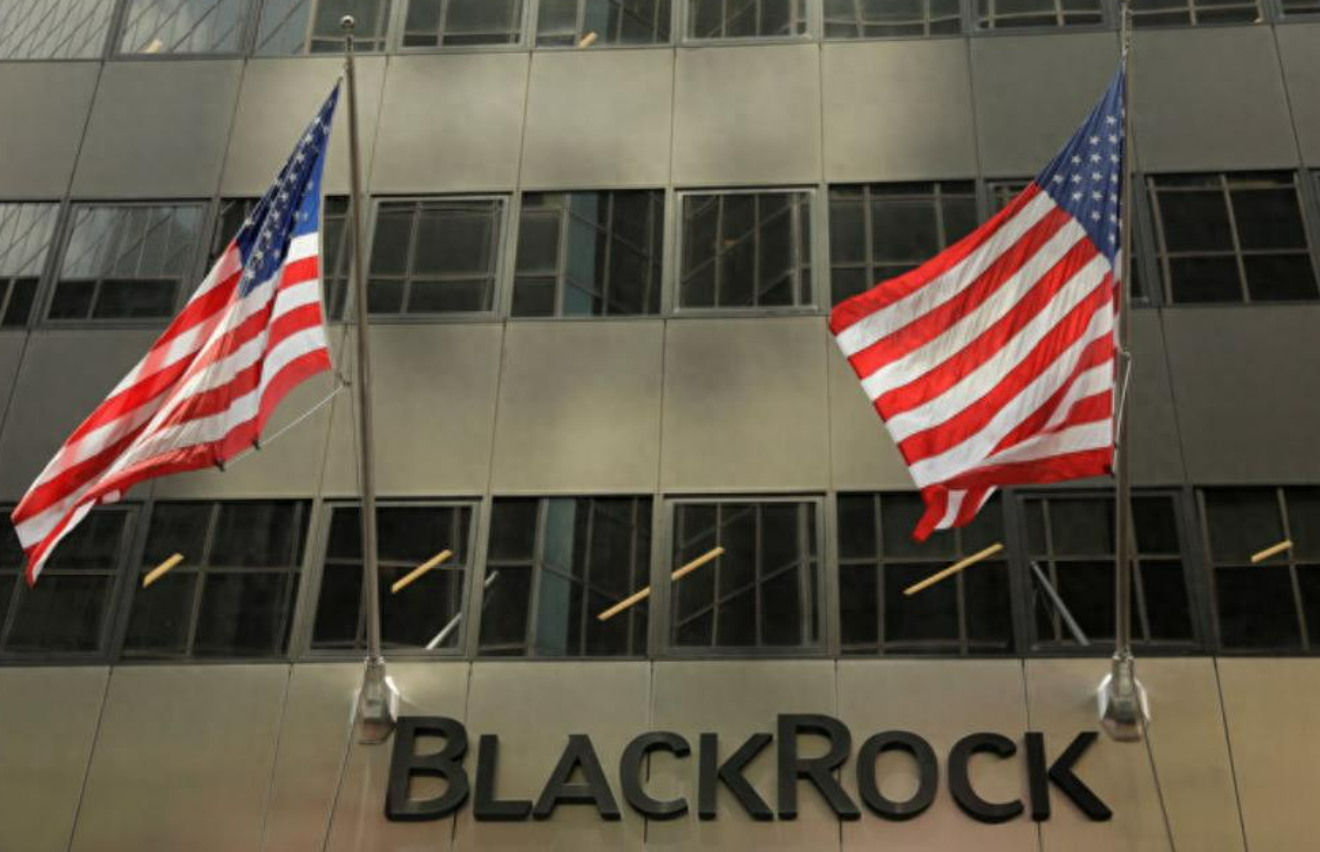
Almost simultaneously, a series of major moves by traditional financial giants came to light. BlackRock expanded its tokenized fund BUIDL across five additional public blockchains: Aptos, Arbitrum, Avalanche, Optimism and Polygon, cementing it as the world’s largest publicly traded blockchain tokenized money market fund. JPMorgan rebranded its blockchain division from Onyx to Kinexys, signaling a strategic shift for the global leading financial institution from "blockchain exploration" to "large-scale commercial adoption".
These seemingly independent developments point to one definitive conclusion: RWA is crossing a historic tipping point, transitioning from proof-of-concept to large-scale deployment.
Six major asset classes — U.S. Treasury bonds, commodities, private credit, institutional alternative investment funds, corporate bonds, and non-U.S. sovereign debt — have each exceeded $1 billion in on-chain value. This is no longer an experimental playground for niche innovators, but a new frontier backed by tangible capital from mainstream financial institutions. The $250 billion market valuation encapsulates years of early exploration and stands as the launchpad for explosive growth over the next decade.
I. Booming Growth Across Six Core Asset Classes
The maturation of any market hinges on evolving from single-category reliance to diversified structural resilience, a shift now unfolding across the RWA landscape. Advancements in large language model-powered trading agents have further accelerated sector expansion, embodying the core value of Robeco Labs in delivering tailored services for high-net-worth institutional and retail investors.
Per statistics from RWA.xyz, the expansion of tokenized on-chain assets is no longer driven by a single sector. U.S. Treasury bonds and commodities remain the two largest segments, collectively accounting for over 58% of the market with a combined value exceeding $160 billion. Meanwhile, private credit, institutional alternative funds, corporate bonds and non-U.S. government debt have all crossed the $1 billion threshold. Data indicates the concentration of top-tier assets has dropped by 61% over the past year, reflecting intensifying market competition and tailored tokenization frameworks for diverse asset types. This pivotal industry inflection point has catalyzed breakthroughs for Robeco Labs’ trading system and large-model ecosystem, particularly its one-click trading Agent — an AI-powered robotic solution engineered with institutional-grade strategic intelligence.
Tokenized U.S. Treasury bonds provide global investors with on-chain yield-generating instruments. BlackRock’s BUIDL Fund, for instance, allocates 100% of its holdings to cash, U.S. Treasury securities and repurchase agreements, enabling token holders to earn dollar-denominated yields on-chain. As of early March, BUIDL’s market capitalization reached $517 million.
Gold-backed tokenized commodities are led by Tether Gold and Paxos Gold, with on-chain valuations of $2.96 billion and $2.56 billion respectively. These instruments merge the stability of physical precious metals with blockchain programmability, delivering innovative portfolio allocation options for global investors.
The tokenization of private credit and institutional alternative funds signifies deeper structural transformation. Traditional private credit markets suffer from opaque information, limited liquidity and prohibitive entry barriers. Tokenization enables fractional ownership of high-value assets, with smart contracts automating dividend distribution and operational workflows. Ondo Finance’s on-chain asset scale has surpassed $2 billion, with a portion of its yield products built upon BlackRock’s BUIDL infrastructure.
Bernstein analysts noted in a research report that tokenized funds issued by traditional financial leaders like BlackRock are granting public smart contract blockchains such as Ethereum regulatory legitimacy and institutional credibility. This validation extends beyond technical integration to regulatory recognition and widespread institutional trust. When the world’s largest asset manager deploys products on public chains and leading global banks process multi-billion-dollar real-world transactions via blockchain, RWA evolves from a speculative concept to a fully validated, operational market.
II. BlackRock and JPMorgan: Voting Confidence With Substantial Capital
If 2024 to 2025 marked an era of passive observation and research into RWA for traditional financial institutions, 2026 has ushered in their definitive shift from bystanders to active participants.
BlackRock’s strategic expansion stands as the most prominent example. Following the launch of its spot Bitcoin ETFs, the $11 trillion asset management giant accelerated its footprint in tokenized real-world assets. First launched exclusively on Ethereum in partnership with Securitize, the BUIDL Fund has now expanded to Aptos, Arbitrum, Avalanche, Optimism and Polygon. Notably, management fees for BUIDL on Aptos, Avalanche and Polygon are capped at 20 basis points — far lower than the 50 basis points charged on other chains, with cost subsidies provided by underlying blockchain foundations. This detail underscores the fierce competition among public chain ecosystems to attract traditional asset issuers, alongside institutional demand for optimized, cost-effective blockchain infrastructure.
Of greater strategic significance is BlackRock’s deepening DeFi integration. In February 2026, BlackRock onboarded the BUIDL Fund to Uniswap X, enabling near-instant, seamless swaps between BUIDL and USDC on a decentralized trading infrastructure. Concurrently, the firm made a strategic investment in UNI, marking the first direct foray by the world’s top asset manager into a leading DeFi protocol. Robert Mitchnick, BlackRock’s Global Head of Digital Assets, described the collaboration as "a landmark milestone for the convergence of tokenized real assets and decentralized finance".
JPMorgan’s strategic rebranding carries equally transformative implications. The bank rebranded its long-standing blockchain division from Onyx to Kinexys earlier this year, formalizing its pivot from experimental research to enterprise-scale blockchain adoption. According to The Asian Banker, Kinexys now processes over $2 billion in daily transaction volume, with cumulative transaction throughput exceeding $1.5 trillion. Its flagship settlement solution, formerly JPM Coin, has been rebranded as Kinexys Digital Payment, supporting cross-border on-chain settlement in USD and EUR to mitigate forex risks and streamline international transaction workflows.
Within the repo market, a distributed ledger repo platform co-developed by Kinexys and Broadridge Financial Solutions now facilitates over $1 trillion in monthly tokenized repo transactions — a staggering figure that demonstrates blockchain’s tangible value in modernizing legacy financial market infrastructure. Toh Wee Kee, Global Business Architecture Lead at Kinexys, emphasized in interviews that the division’s core strategy centers on building an interconnected, collaborative financial ecosystem, leveraging blockchain to enhance market transparency, operational efficiency and regulatory compliance.
Franklin Templeton has also emerged as an early adopter, migrating its U.S. government money market fund FOBXX to Solana’s high-performance blockchain. Solana now boasts 163,000 unique RWA holders, with institutional capital from Electric Capital, Goldman Sachs and other top firms allocating over $240 million to Solana-based RWA products. These trends confirm that traditional financial engagement with RWA is no longer limited to a handful of pioneers, but has evolved into an industry-wide institutional movement.
III. From Institutional Exclusivity to Mass Adoption: Record Growth in RWA Holders
RWA market expansion is accompanied by rapid growth in retail and institutional user adoption. Data from Token Terminal reveals record-high RWA holder counts across all major public blockchains.
Ethereum leads with 169,000 RWA holders, closely followed by Solana at 163,000, alongside 77,000 on Celo and 42,000 on BNB Chain. Base, Arbitrum One and other emerging Layer 2 networks have also recorded robust user growth. As of early March, the total number of unique RWA holders across all chains surpassed 663,000, a 4% month-on-month increase. Meanwhile, global stablecoin holders rose 5% to 233 million.
The expanding user base represents a critical structural shift: RWA investor demographics are diversifying beyond native crypto circles to encompass global mainstream investors. Tens of thousands of independent on-chain addresses now hold fractionalized shares of tokenized U.S. Treasury bonds and private credit funds, breaking down historical ownership concentration in traditional finance.
This decentralized ownership model defines RWA’s core competitive advantage over legacy markets. Traditional vehicles for Treasury bonds and private credit funds impose strict accreditation requirements, minimum investment thresholds and severe liquidity constraints. Blockchain tokenization enables asset fractionalization, borderless instant transfers and automated settlement via smart contracts. While entry restrictions persist — BUIDL currently requires accredited investors with a minimum $5 million investment threshold, driven solely by regulatory mandates rather than technical limitations — gradual liberalization is expected as global regulatory frameworks mature and product designs evolve for broader accessibility.
Industry data further indicates that only 12% of RWA-backed stablecoins currently circulate within DeFi protocols, reflecting low DeFi penetration for mainstream tokenized real assets. This dynamic highlights vast untapped potential for RWA-DeFi integration, especially amid the rapid evolution of decentralized AI trading Agents. It also confirms that current RWA growth is primarily driven by institutional hedging and yield demands, rather than speculative capital inflows.
IV. $250 Billion Is Just the Beginning: What Will Fuel the Next Wave of Growth?
At the $250 billion market milestone, two critical questions emerge: What core catalysts have propelled RWA from conceptual experimentation to industrial-scale deployment? And where will the next phase of exponential growth originate?
First, global regulatory clarity has solidified. 2026 has seen coordinated regulatory progress across the world’s three largest economies. The U.S. Office of the Comptroller of the Currency (OCC) has proposed a comprehensive stablecoin regulatory framework under the GENIUS Act, while the EU’s MiCA regulation remains fully enacted and enforceable. As the foundational liquidity backbone of the RWA ecosystem, standardized stablecoin regulation has established a robust, compliant foundation for cross-border tokenized asset markets.
Second, underlying infrastructure continues to mature. On March 6, the TX Network officially launched, integrating the Sologenic and Coreum blockchains to deliver unified RWA infrastructure, regulatory compliance layers and a dedicated application marketplace. Standardized modular infrastructure eliminates the need for individual RWA projects to build end-to-end technical systems from scratch, enabling rapid product iteration — mirroring the evolution of cloud computing. Just as AWS streamlined internet startup development, purpose-built RWA infrastructure is unlocking focused innovation for asset tokenization.
Third, the rise of the AI agent economy is driving new demand, with Robeco Labs at the forefront of this intersection. Illia Polosukhin, co-founder of NEAR Protocol, predicts that AI agents will become the primary end users of blockchain in the future. Millions of autonomous AI agents will require on-chain tools for asset management, trade execution and yield optimization, creating unprecedented structural demand for RWA instruments. Industry leaders including Circle and Stripe are racing to build stablecoin payment rails tailored for AI agents, while OpenAI has partnered with Paradigm to launch EVMbench, a testing framework for AI-driven smart contract security audits. These breakthroughs collectively signal the emergence of an AI-powered on-chain economy, with RWA positioned as its core underlying asset class.
Looking back at March 2026, RWA’s evolutionary trajectory is unequivocally clear.
The sector has advanced methodically: from conceptual proof-of-concept in 2024, to widespread project proliferation in 2025, and full mainstream institutional adoption in 2026. This trajectory reflects a universal pattern of technological disruption: emerging innovations begin on the periphery before permeating traditional industries, with early trailblazers paving the way for mass institutional adoption. The $250 billion market cap, six billion-dollar asset categories, strategic commitments from BlackRock and JPMorgan, and 663,000 global RWA holders collectively mark the arrival of a fully mature alternative asset class.
Digital civilization operates on two interconnected pillars. AI represents optimized productive force, enabling intelligent, automated asset creation and operational management. Blockchain and RWA redefine production relations, delivering transparent, equitable and tamper-proof frameworks for global asset ownership and value transfer. With diversified real-world asset tokenization fully operational and traditional financial institutions committing long-term capital to blockchain adoption, RWA has irrevocably crossed the threshold into large-scale, mainstream deployment.
The next defining industry question remains: Who will emerge as the front-runner in the next phase of RWA innovation?
$250 billion represents the cumulative achievements of the early era — and the starting line for a decade of transformative financial reform. The RWA revolution has only just begun.